China visa photo requirements for U.S. citizens
Reviewed July 2026. This guide summarizes official Chinese Embassy and consular photo rules — the visa authority makes the final acceptance decision.
U.S. passport holders applying through the China Online Visa Application system should prepare a photo that follows the Chinese visa photo format, not the U.S. 2 × 2 inch passport photo format. The requirements are enforced by an automated checker, so exact geometry and file parameters matter.
1. Photo size and composition
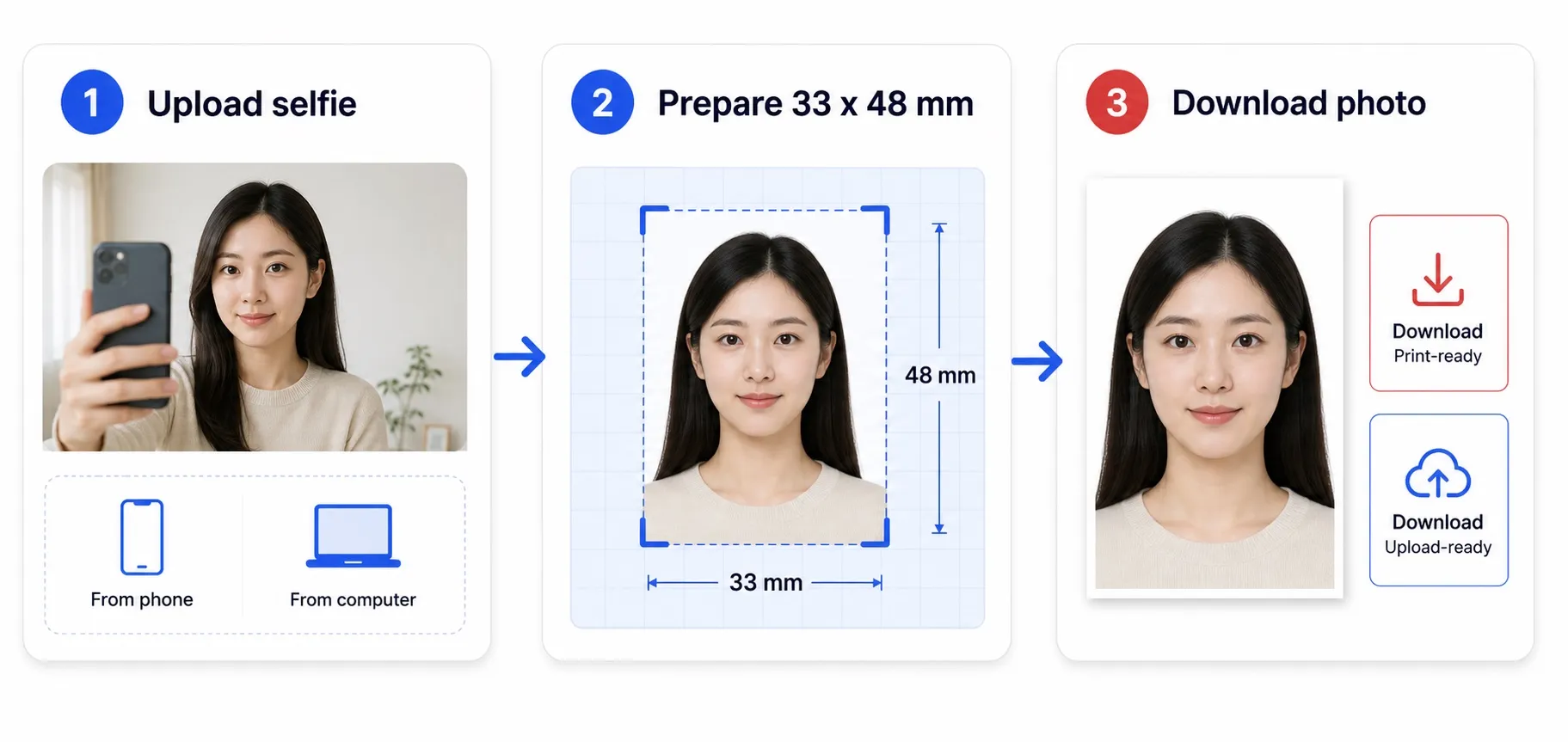
The China visa photo format is a vertical portrait, 33 mm wide by 48 mm high. The face must be centered and upright. Official photo guidance uses a head width range of 15–22 mm, a head height range of 28–33 mm, and a top margin of 3–5 mm from the top of the head to the top of the photo.
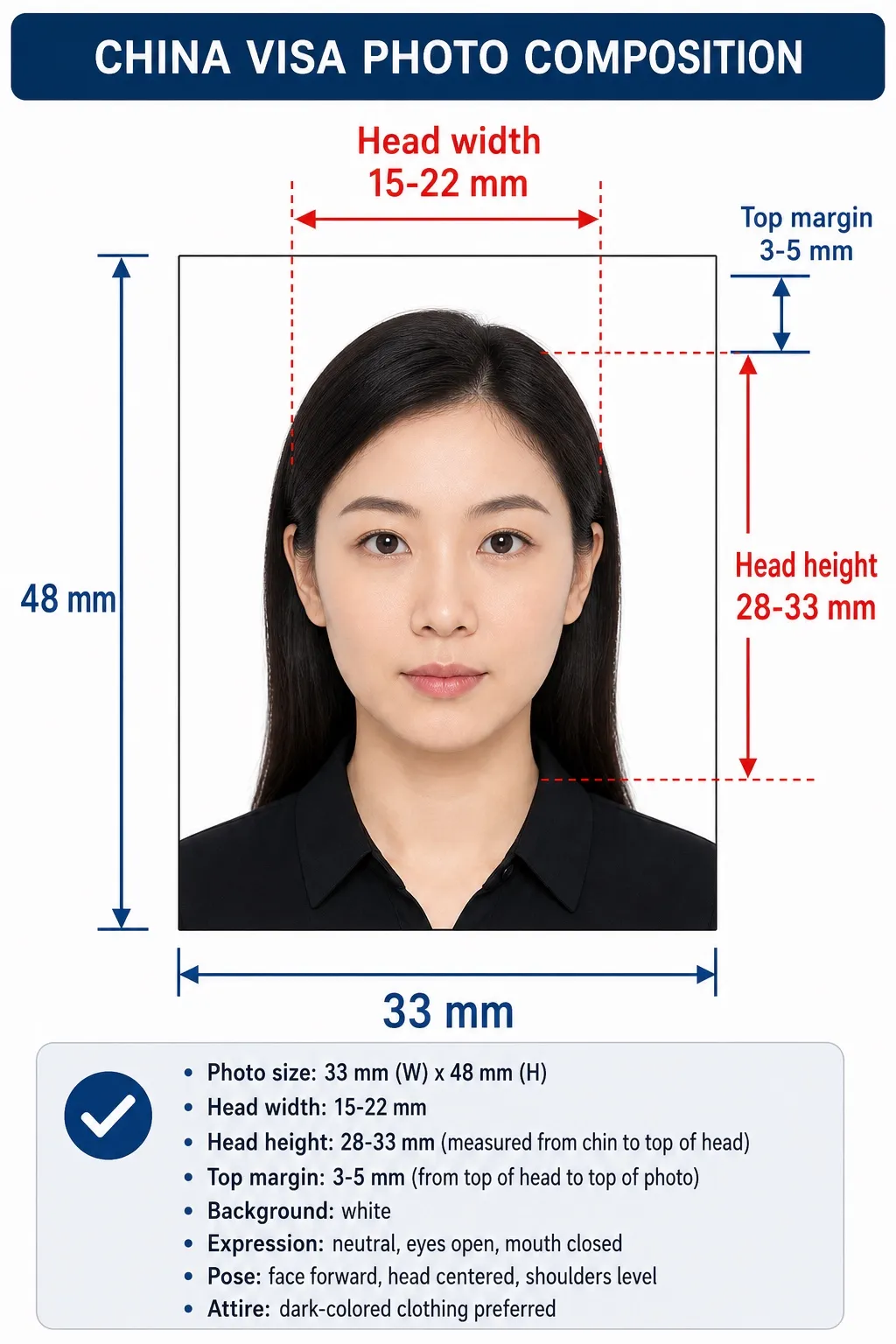
| Requirement | Official range | Why it matters |
|---|---|---|
| Physical photo size | 33 mm × 48 mm | Chinese visa photos use a vertical portrait ratio, not a square U.S. passport format. |
| Head width | 15 mm to 22 mm | Measured across the widest part of the head. |
| Head height | 28 mm to 33 mm | Measured from the bottom of the chin to the top of the head, including hair. |
| Top margin | 3 mm to 5 mm | Distance from the top of the head to the top edge of the photo. |
| Face position | Centered and upright | Keep shoulders level and face the camera directly. |
| Background | White or near-white | Plain, clean, and shadow-free. |
2. Digital photo upload requirements
U.S. applicants now use the China Online Visa Application system for the application workflow. The digital photo should be a JPEG image with the required portrait dimensions and file size range. A file that looks correct visually can still fail upload if the pixels or file size are outside the accepted range.
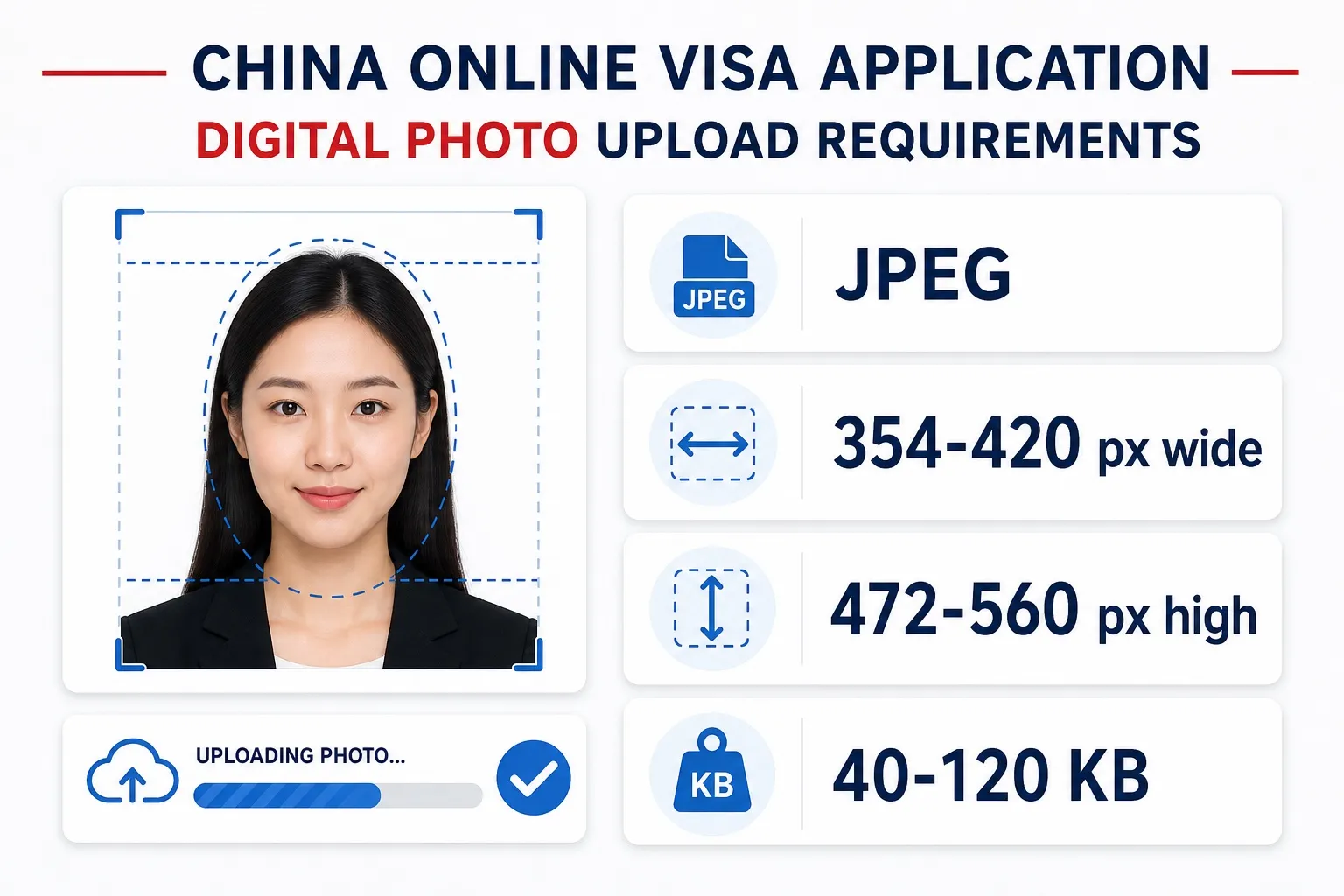
- Use the correct dimensions: export the digital file at 354–420 pixels wide and 472–560 pixels high.
- Keep JPEG file size in range: the file should be JPEG and generally between 40 KB and 120 KB for the online application upload.
- Do not add visual marks: the final upload file must not contain borders, measurement labels, stamps, flags, watermarks or text.
3. Background, lighting, and clothing
Use a plain white or nearly white background, even lighting, and natural skin tone. Dark clothing is preferable because it separates the shoulders from the white background. Avoid white tops, uniforms, heavy shadows, tinted lighting and patterned walls.
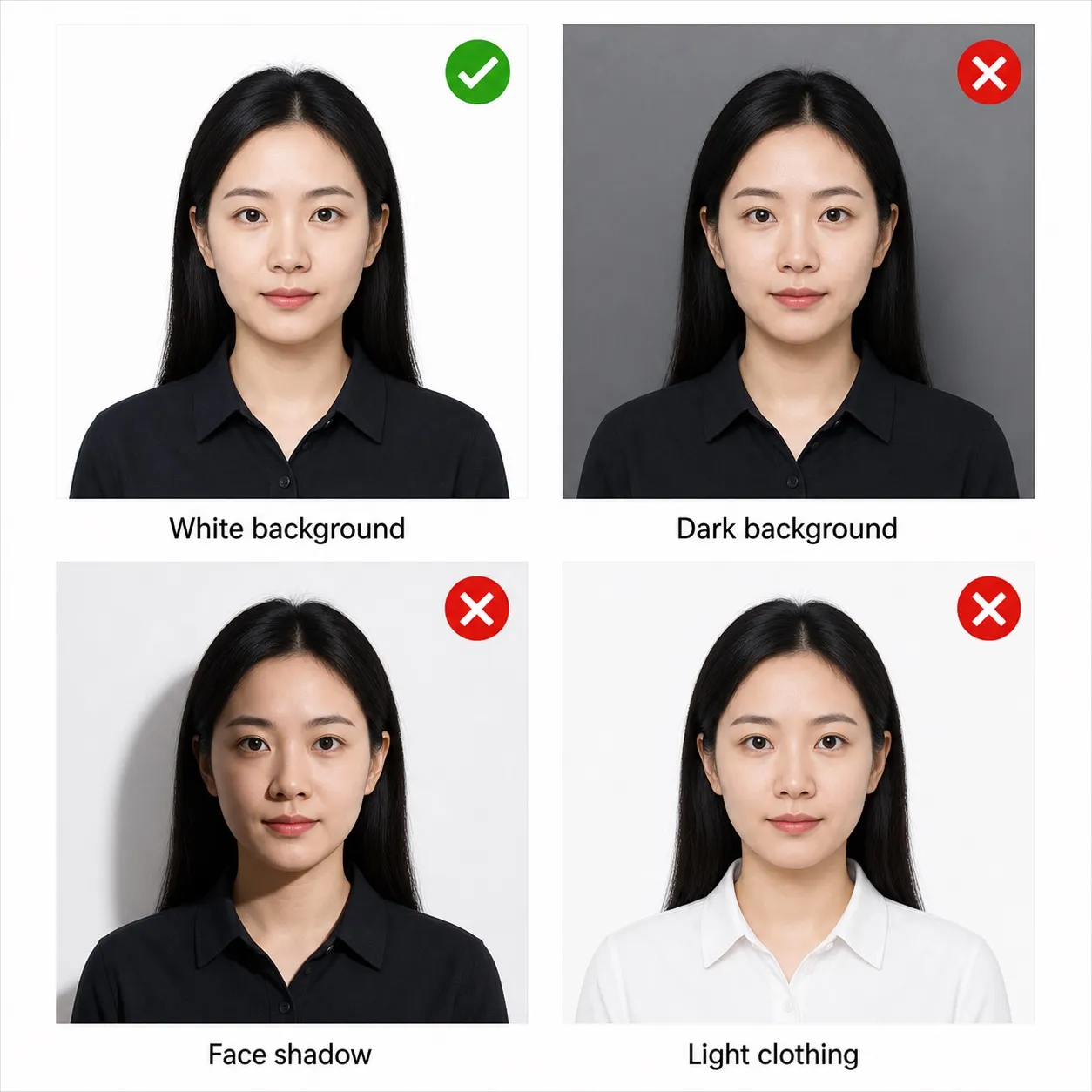
- Use a plain white background: white or nearly white, with no wall texture, objects or patterns — or let the AI replace it entirely.
- Avoid shadows and color casts: use soft front lighting so the face and background are evenly exposed with natural skin tone.
- Wear dark normal clothing: dark everyday clothing helps the shoulders separate from the white background. Avoid uniforms and white tops.
- Keep the full face visible: hair, accessories, head coverings or shadows must not obscure the eyes, eyebrows, nose, mouth, jawline or face outline.
4. Pose and facial expression
Face the camera directly with your head centered, eyes open, and mouth closed. The photo should show a natural front-facing portrait. Do not tilt your head, look away from the camera, smile with teeth, open your mouth, or let hair cover the face.
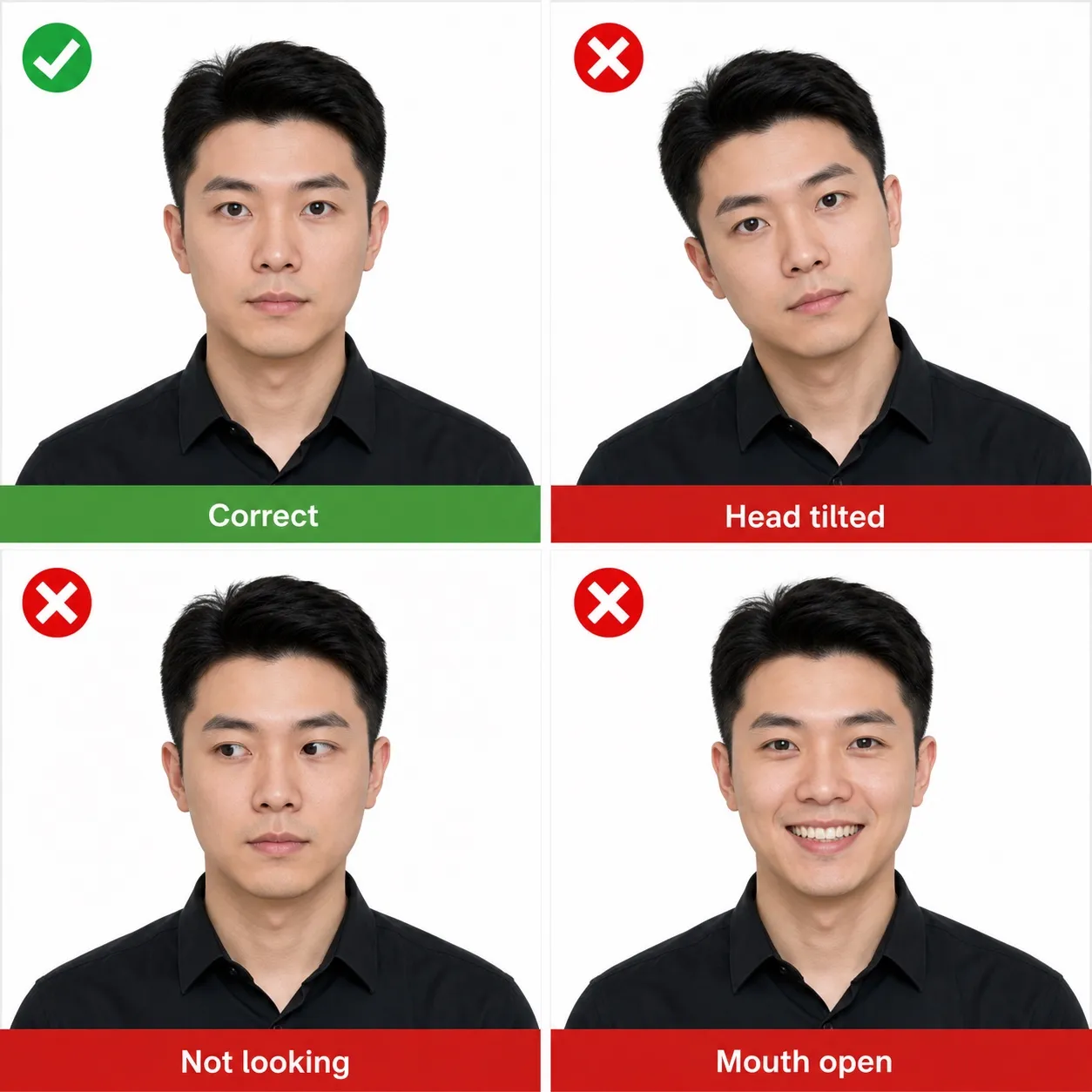
- Look directly at the camera: the face should be front-facing, centered, and not rotated or tilted.
- Keep eyes open and mouth closed: a neutral expression is safest. Avoid big smiles, open mouth or exaggerated expressions.
- Remove glasses and headwear: avoid eyeglasses, sunglasses, hats, caps and headphones. Religious head coverings should not hide the face.
- Use a recent natural photo: the photo should reflect your current appearance and must not be retouched or beautified.
5. Print and image quality
Your final image should be clear, sharp, correctly exposed, and free of visible compression artifacts. If you need a physical copy, print the 33 × 48 mm image on quality photo paper and keep the same crop. Do not add borders, measurement marks, watermarks, text, flags or decorative backgrounds.
- Preserve natural appearance: sizing, background preparation and lighting balance must not change identity, facial features, hairstyle, skin texture or age.
- Keep the image sharp: avoid blur, low resolution, heavy compression, overexposure, underexposure and red-eye.
- Prepare a clean final file: a clean portrait only — no text, borders, guide lines, logos or decorative elements.
- Check the latest local instructions: Chinese consulates and the COVA system may update workflow requirements, so confirm before submission.
6. Common reasons China visa photos fail
- Using a square U.S. passport photo: China visa photos are 33 × 48 mm — a 2 × 2 inch U.S. crop has the wrong aspect ratio.
- Wrong digital dimensions or file size: a photo can look correct but fail upload if pixels or KB are outside the accepted range.
- White clothing on white background: light tops blend into the background and reduce shoulder visibility.
- Retouched or beautified face: skin smoothing, face reshaping, filters, changed hairstyle or altered expression make the photo look unnatural.
- Face not centered or head tilted: the head should be upright and centered with the full face visible.
- Shadows, glare, or busy background: shadows on the face or wall, glare, gray backgrounds and patterned walls cause rejection.
Make your China visa photo online
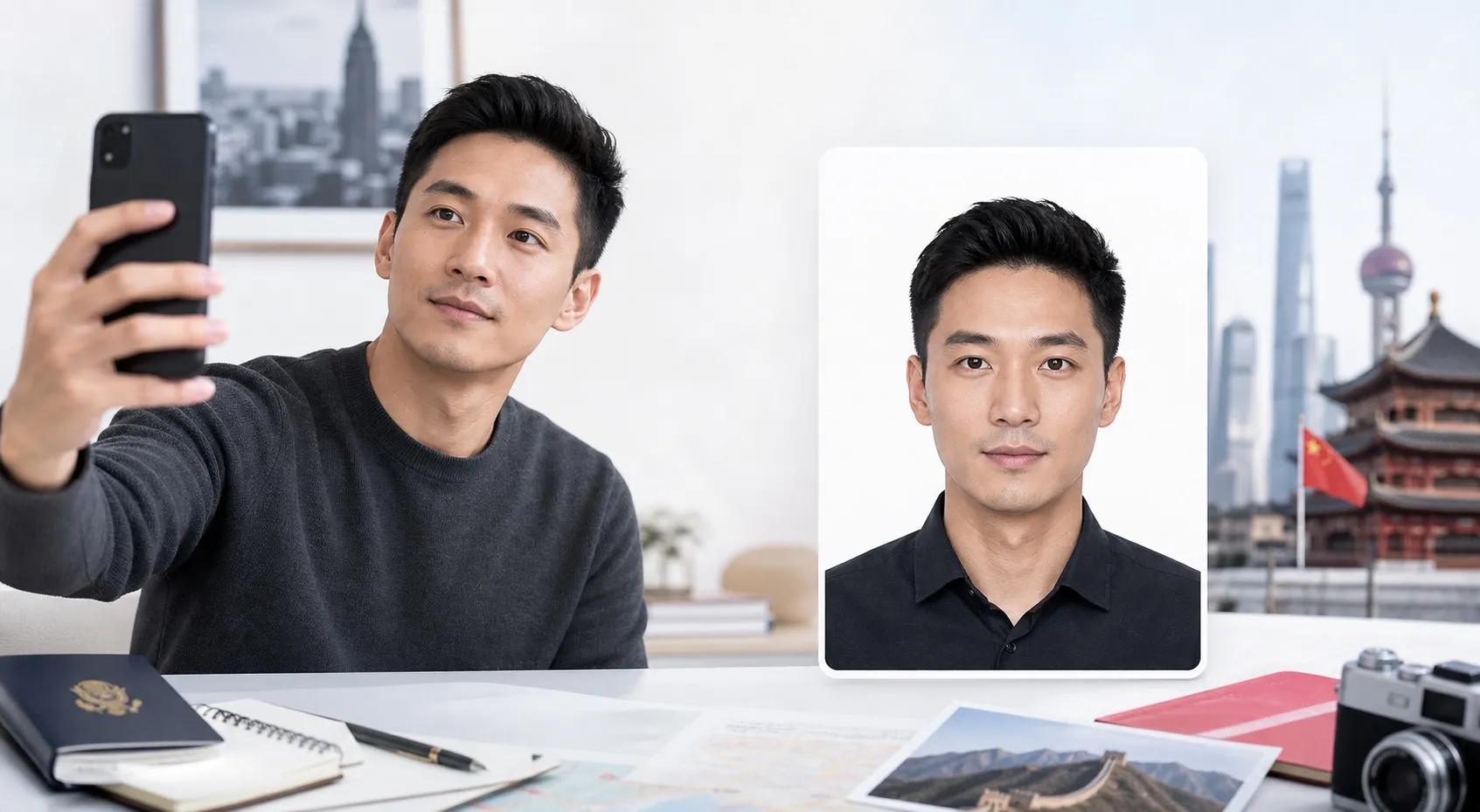
Upload a selfie in the tool above and the AI generates a COVA-ready photo: exact 33 × 48 mm geometry, compliant head size and top margin, clean white background, and a JPEG exported inside the digital upload window. Preview it free before paying.
Official sources
Use these official resources to confirm the current visa workflow and photo specifications before submitting your application.
- Chinese Embassy in the U.S. visa application requirements — current U.S. Embassy page for the Chinese visa workflow and the COVA system.
- China Online Visa Application (COVA) portal — official portal for completing the application and uploading materials.
- Official China visa photo requirements — embassy photo specification page covering 33 × 48 mm size, head dimensions, background, pose and digital rules.
- Chinese visa application photo requirements PDF — photo rules used by Chinese visa application service centers, print and digital.